


Notes on Distance and Depth
Frederike Sperling
“Distance has become relative nowadays,” I think while looking out of my Vienna office, pondering Nebraska. The Bemis Center is a full 5,000 miles away and so is the exhibition, and the art works that this text is meant to respond to. These days, in which the lives of the privileged are organized around same-day shipping, on-demand services and petrocapitalism’s facilitation of hypermobility, everything seems absurdly close at hand.
Within this economic preset of instantaneity, flow, and speed, Anna Kornbluh identifies the emergence of a new cultural style: immediacy. “Spatially,” she argues, “immediacy… deliver[s] everything close: the world at your fingertips; ‘Let’s go places’.” Culturally, this style manifests, according to Kornbluh, in an increased desire for intense sensual experience and a disavowal of mediation altogether: hyper-accessible, quick, drive-in-like spectacles such as the immersive installations of famous historical paintings or exhibition displays optimized for selfies—all geared towards sensual awe and rapid circulation. For example, Van Gogh Exhibit: The Immersive Experience toured in fifty-six cities across the three continents. See also, Bubble Planet: The Experience Museum for All Senses or Machu Picchu: Journey to the Lost City! which promotes its offers as follows: “Get transported straight into the heart of the Inca Empire!” For ten dollars you can “transform yourself into a unique work of art… inspired by you and the magic of Machu Picchu.”
It’s as if everything distant were synchronized into a loop of close-ups, each stripped of context and history. The result is a homogenizing effect, a flattening of experience that undermines complexity, ambiguity, and tension. Depth (as a vertical axis of distance) is not simply relativized. It gradually becomes difficult to access. And perhaps already difficult to endure.
This difficulty is compounded by the fact that our perception of the world is increasingly mediated by technology, notably its invisible infrastructures. The neoliberal premise of seamless and frictionless interaction is mirrored in its specific organization of the social. This architecture of sorts is designed around principles of compatibility, of sameness. Privileging consensus, the algorithms of Big Tech companies like Meta, TikTok, or X are trained to amplify opinions and worldviews within self-perpetuating echo chambers. The result is distance in its social dimension. “We have grown far from ourselves. And we have grown far from each other,” notes the poet and writer Kae Tempest in On Connection (2020).
While in the 1990s, the internet was heralded as the harbinger of global harmony (techno-utopian slogans like “One world, one future” come to mind), it has started to foster an unprecedented level of polarization. So much so that “[w]e’ve abandoned the idea that we might, for all our differences, live in a shared reality”, as the author Ash Sakar observes in Minority Rule: Adventures in the Culture War (2025). So, while the world might be at your fingertips, your neighbor from next door may just not be.
Perhaps I’ve looked out of that window and into the dark, foggy winter scene for a little too long. “This text is getting utterly grim,” I realize. So, let’s lighten up. Let’s teleport ourselves into one of those fifty-six bubble pools. Smiiiiile!
With the rustle of little plastic balls in my ears, I’m re-reading Tempest: “The internet seems to me to be… the multi-voice of the collective conscious. But it cannot represent the collective subconscious; the spirit of the depths speaks through poetry and music, through fiction, image and myth. It is offline.” In other words, if we want to leave the surface and go in search of meaning within this matrix of neoliberal control of subjectivity, we may need to switch our screens off. Stand still and listen. Really look. And learn. Make room for depth, wild thoughts and chaos. For, human existence is messy and complex. “The spirit of the depths is the ancient part of you. The part that responds to the invisible world. The part that makes no sense and speaks in heavy symbols.” Sometimes, thus, friction and ambiguity are realms to dwell in, not to solve (so they can be monetized).
In this light, art and liveness can conjure a sphere; they can become portals for speculation, critical reflection and connection beyond sameness. Gathering performance, sculpture, video and installation Close to the Clouds: Encountering Digital Diasporas sets out to temporarily hold such a sphere. As far as I can tell from in front of my screen in Vienna, it positions distance not as something to be flattened out and relativized but, on the contrary, as something to be acknowledged and expanded while grounded in nuanced contexts.
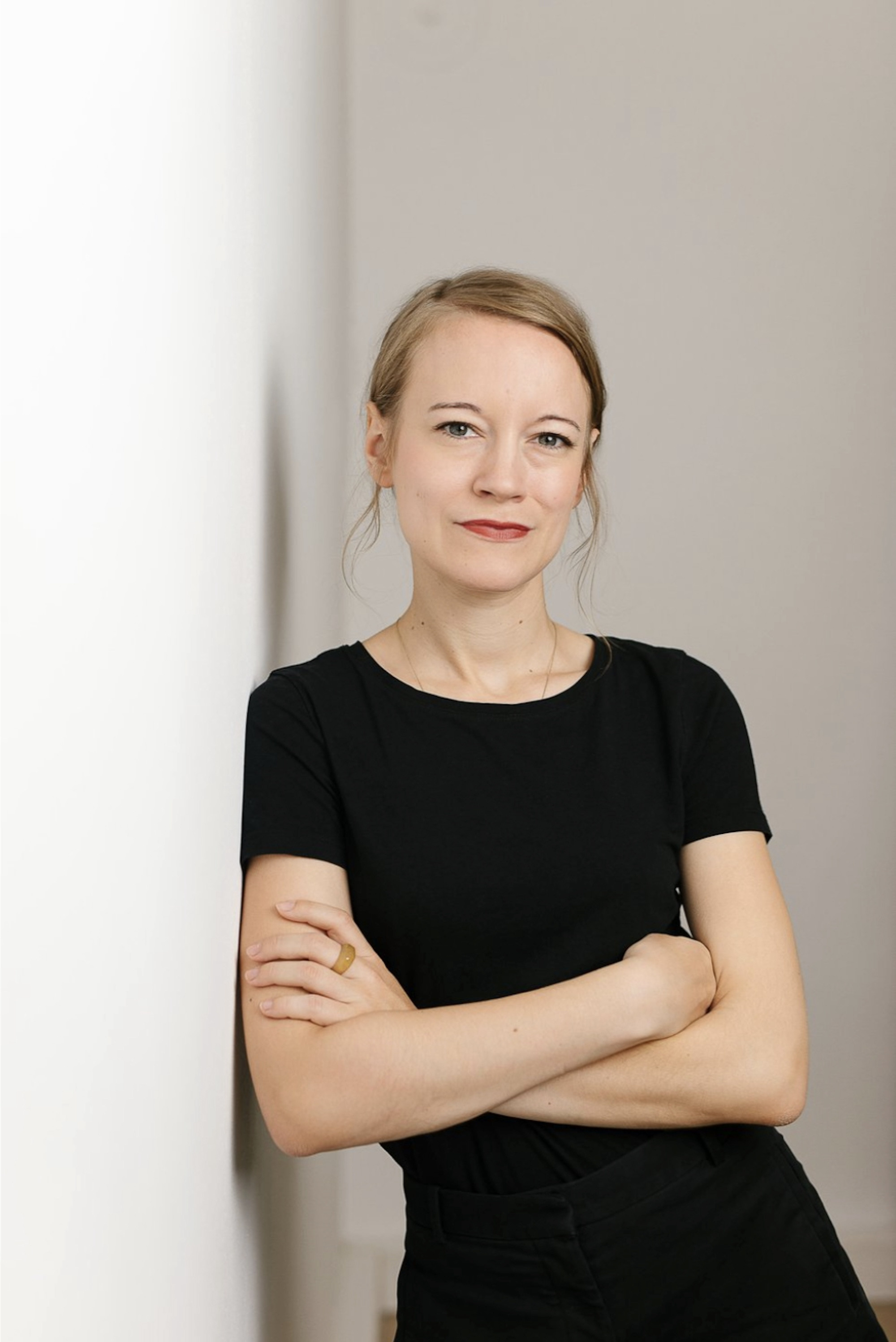
About the Author
Frederike Sperling (she/her) is a curator and writer living in Vienna, Austria. Since 2023, she has been the artistic director of Kunstraum Niederoesterreich, a contemporary art institution dedicated to time-based media. In this capacity she has worked on new commissions, (performative) exhibitions, as well as live and discursive events with artists and collectives including OMSK Social Club, Seba Calfuqueo, Tiona Nekkia McClodden, P. Staff and Sahej Rahal.
Previously, she served as Head of Program at the art association das weisse haus and as a curator at Thyssen-Bornemisza Art Contemporary (TBA21). Between 2013 and 2015, she was curatorially involved with the Stedelijk Museum in Amsterdam and the Melly Instituut in Rotterdam. Alongside jury activities and teaching assignments at institutions such as Academy of Fine Arts Vienna, University of Applied Arts Vienna and Kunstuniversität Linz, she has published essays with Sternberg Press and Mousse Publishing, among others, and regularly writes for international art magazines.
In her curatorial practice she focuses on time-based media that address themes of corporeality and relationality from intersectional perspectives. In the framework of her independent work, she has realized projects with Black Obsidian Sound System (B.O.S.S.), Danielle Brathwaite-Shirley, Jesse Darling and Raju Rage, Debby Friday, Evan Ifekoya, and Himali Singh Soin, among others.
Image above: Zainab Aliyu, Hovering (or, suspended between arrival and departure) (installation view), 2026. Courtesy of the artist. Photo: Colin Conces.
Learn More
This essay is presented with the exhibition:
Contemporary Arts
724 S. 12th Street
Omaha, NE 68102
402.341.7130
info@bemiscenter.org